Javascript DHTML Drop Down Menu Powered by dhtml-menu-builder.com

DOWNLOAD
Chemical Process Safety Newsletter

Issue Date
Articles
File Size

Spring 2010 

Vol. 18 No. 2

  • Effect of Reactant Consumption on Self Accelerating Decomposition Temperature
  • A Successful Characterization of Runaway Reaction Leading to T2 Explosion
  • Chemisens CPA202 – An Overview
  • New Approved Screening Tool For Dust Cloud Explosibility!
(6.57 Mb)

Winter 2010 

Vol. 17 No. 1

  • Modelling Vinyl Chloride Polymerization Kinetics
  • A Practical Approach to Relief System Sizing for Reactive Systems
(2.75 Mb)

Fall 2009

Vol. 16 No. 4

  • Evaluating Electrostatic Dust Hazards
  • A Simple and Cost Effective Method for Determination of the Self-accelerating Decomposition Temperature (SADT): Part II - Solids or Viscous Liquids
  • Copolymerization of Monomers with Different Copolymerization Parameters
  • FAI Supporting Education: Interview with David Mody, Queen's University
(1,123 Kb)

Summer 2009

Vol. 16 No. 3

  • A Simple and Cost Effective Method for Determination of the Self-Accelerating Decomposition Temperature (SADT): Part I - Non-Viscous or Well Stirred Liquids
  • Combustible Dust Testing and Analysis at FAI
  • FAI Users Forum - Vinyl Acetate Emulsion Polymerization using ChemiSens Chemical Process Analyzer (CPA202) Reaction Calorimeter
  • FAI Supporting Education - Interview with Prof.Ralph W. Pike, Louisiana State University
(1,781 Kb)

Spring 2009

Vol. 16 No. 2

  • Vent Sizing for Fire Emergencies
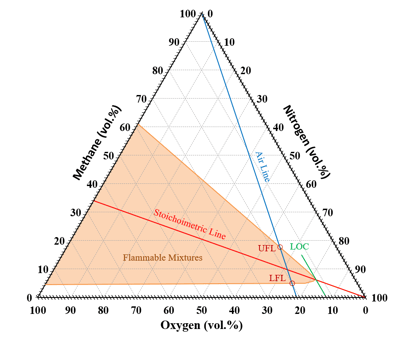
  • Limits of Flammability of Chemicals at Elevated Temperature and Pressure Using a 5-L Parr Vessel Reactor
  • Battery Cell Testing
  • Carbon Capture in the CPA202
  • VSP2 Users Forum - Ensure Well-Mixed Samples
(1,905 Kb)

Winter 2009

Vol. 16 No. 1

  • ARC Users Forum - Choosing an ARC Bomb
  • Condensed-Phase Combustion Characteristics: Burn Velocity and Minimum Ignition Energy (MIE)
  • Copolymerization of Vinyl Pyrrolidone and Vinyl Imidazole
  • Value of Metered Reagent Injections Under Adiabatic Conditions
  • Interview with Dr. Joseph Louvar, Wayne State University
(1,457 Kb)

Fall 2008

Vol. 15 No. 4

  • Two-Phase Flows Through SRVs
  • Redox Initiation in Suspension Polymerization of Vinyl Chloride
  • AIChE and SACHE Safety Certificate Program - Interview with Prof. Ronald J. Willey, Northeastern University
  • Secondary Dust Explosions
(1,710 Kb)

Summer 2008

Vol. 15 No. 3

  • Fugitive Dust Control - Don't Let it Sit Around
  • Quick Hazard Screening by Closed Cell ARSST Using Standard ARC Bombs
  • Optimal Production Rate in PVC Latex Reaction
  • ARSST Users Forum: Thermal Scan vs. Adiabatic Hold Experiments
  • The Hanford Spent Nuclear Fuel Project and K Basins Cleanup Project
  • FAI's Dedication to Education
(3,433 Kb)

Spring 2008

Vol. 15 No. 2

  • FAI is pleased to represent ChemiSens in North America
  • Non-Equilibrium Saturated and Subcooled Flashing Flows
  • Using Calculated Adiabatic Flame Temperatures to Assist in Flammability Envelope Prediction
  • Calculate Characteristic Time to Runaway
  • Interview with Prof Jan Wagner from Oklahoma State   University
(1,833 Kb)

Winter 2008

Vol. 15 No. 1

  • Deflagration Venting - NFPA 68 2007 Edition
  • Application of the Integral Method to Waterhammer Transient in a Pipe Line with Entrapped Air
  • Updated Version of the ARSST Software, Version 4.4
  • VSP Users Forum - New Test Cell
  • Chem-E-Car Competition
(2,625 Kb)

Fall 2007

Vol. 14 No. 4

  • A Data Interpretation Exercise -50% DTBP in Toluene
  • U.S. CSB Video Review - Reactive Hazards: Dangers of Uncontrolled Chemical Reactions
  • Testing Hazards of Novel Dusts
  • Reduce Version 2.0.5 Software Release
  • Interview with Prof. David Murhammer,The U. of Iowa
(1,487 Kb)

Summer 2007

Vol. 14 No. 3

  • Using the ARSST to Study Nitration Reactions
  • Venting of Highly Energetic Gassy Systems
  • Evaporation Rates from Flammable Liquid Spills Indoors and Ventilation Rates for Controlling Flammable Vapor
(654 Kb)

Spring 2007

Vol. 14 No. 2

  • Closed Cell ARSST Testing
  • Dust Explosion Characterization and Hazard Assessment, Part 2
  • Primary Dust Explosion Strength Required to Initiate Secondary Dust Explosion
  • A Generalized Deflagration Vent Sizing Formula
(2,215 Kb)

Winter 2007

Vol. 14 No. 1

  • Available ARSST Test Cells
  • Determine Incubation
  • Time to Runaway for Acrylic Monomers
  • First Order Rate
  • Constant Evaluation
  • Determination of TSADTfor Self-Reactive Substances: Reactant Shape Sensitivity
  • Dust Explosion Characterization and Hazard Assessment
(1,355 Kb)

Fall 2006

Vol. 13 No. 4

  • Adiabatic Hold Testing Using the ARSST
  • Surge Volume Containment for High Pressure Tests
  • Predicting Deflagration Pressure Rise Starting From Elevated Pressure and Temperature
  • Thrust Force Calculations for Two-Phase Flows
(1,274 Kb)

Summer 2006

Vol. 13 No. 3

  • Accommodate Gassy Systems in Closed VSP Tests
  • Closed Cell ARSST Testing
  • Too Phazed by Two-Phase Flow: Make Direct Use of Single Phase Flow Information
  • VSP2 Update: New Software Release
(1,984 Kb)

Spring 2006

Vol. 13 No. 2

  • High-Momentum Volatile Liquid Release: Flammable Mass and Combustion Over-pressure
  • Simple Two-Phase Hybrid Vent Model
(584 Kb)

Winter 2006

Vol. 13 No. 1

  • Solids Testing in the ARSST
  • FATE 2.0: Facility Flow, Aerosol,Thermal, and Explosion Model
  • Development of Check Valve Characteristic Curves with TREMOLO 3 Dynamic Check Valve Model
  • Revisiting DIERS Two-Phase Methodology Twenty Years Later: Reactive Hybrid Systems
(989 Kb)

Fall 2005

Vol. 12 No. 3

  • Comparison of ARSST and VSP2 (Glass Test Cells with H2 02 )
  • New Software Release for the Advanced Reactive System Screening Tool (ARSST)
  • Revisiting DIERS Two-Phase Methodology Twenty Years Later: Reactive Gassy Systems
(1,172 Kb)
Summer 2005 - Vol. 12 No. 2
  • Closed Cell Battery Tests
  • Reduction of Organic (Hydrogenation Reaction)
  • FTAI (Fast Thermal Activity Interpreter) Update
  • Revisiting DIERS Two-Phase Methodology Twenty Years Later: Reactive Vapor Systems
(886 Kb)
Spring 2005 - Vol. 12 No. 1
  • Isothermal VSP2 Tests to Quantify Gas Generation
  • Fire Exposure Vent Sizing: Liquid-Full Vessels with Non-Foamy Systems
  • Tools for Assessing Hydrogen Peroxide (HP) Stability and Storage Vents
(625 Kb)

Fall 2004 - Vol. 11 No. 2

  • Entrainment of Contaminated Material During Venting
  • Gassy System Vent Sizing - The Role of Two-Phase Flow
(615 Kb)

Spring/Summer 2004 - Vol. 11 No. 1

  • Heat of Mixing in ARSST™
  • Software for Reactivity Management
  • Fast Thermal Activity Interpreter (FTAI) for Controlling Chemical Reaction Hazards
(610 Kb)

Summer 2003

Vol. 10 No. 2 

  • Emulsion Polymerization in VSP2™
  • Generalized Vent Sizing Equation for Reactive Systems
  • Correlation of Numerical Solutions for Compressible Gas Flow through a Pipe Fed by an Orifice.
(780 Kb)

Spring 2003

Vol. 10 No. 1

  • Controlled Liquid Addition
  • Hand Calculation Methodology for Assessing Two-Phase Flow Blowdown Rates
  • Vapor and Dust Deflagration for Sonic and Subsonic Venting
(750 Kb)

Fall 2002

Vol. 9 No. 2

  • Easy Vent Sizing Techniques or Low Pressure Vapor and Dust Deflagration Scenarios
  • Certify Pressure Relief Valves in Two-Phase Flow Service
(1.55 Mb)
Spring 2002 - Vol. 9 No. 1
  • Fast Data Acquisition in VSP™ test cell - Plumbing and Instrumentation
  • PRV Sizing Including 3% (Inlet) and 10% (Outlet) Rules
  • Operation of Reflux Condensers and Flooding Limitations
(2.03 Mb)

Fall 2001

  • Safe Test Design
  • Instructions for High Pressure Piston
  • Vent sizing for Propagating Vapor Phase Reactions
  • Eliminate Oversizing - Vent Well Below Design Pressure
  • Two-Phase Flashing Flow vs.Compressible Gas Pipe Flow

(2.01 Mb)


Winter 2001

  • Deodorizaiton of Stench Gases
  • 10 m3 Hybrid Runaway - Flooding Limitation for Reflux Condensers
  • Prevent BLEVE's
  • Isothermal VSP2 Testing Characterizes Gassy Decomposition in Dilute Peroxide Solutions

(2.55 Mb)

Spring 2000

  • Remove Inhibitorfrom 1,3 Butadiene
  • ARSST™ Description Simple Vent Sizing Methodology (Feb 2000 CEP)
  • Determine Self-Accelerating Decomposition Temperature, TSADT
  • Explosive Hazards Analysis
  • Updated Reactive System Classification and Vent Sizing Methodology
(2.78 Mb)

Fall / Winter 1999 

  • Enhanced Magnetic Stirring Capability
  • Choosing the Appropriate Test Cell
  • Vent Sizing for Fire Emergencies
  • Quantitative Risk Assessment
  • Preventing Runaway Reactions
(2.05 Mb)

Summer 1999 

  • Process Safety Program at the University of Iowa
  • VSP2™ Application: Pressure Regulated Open System to Determine Tempering
  • Screen Minimum Requirements for Reactive Chemical Systems
  • Relief Device Documentation
  • Emergency Vent Sizing for Internal Vapor Deflagration
(2.07 Mb)

Winter / Spring 1999 

  • Open Tests with Corrosive Chemicals
  • VSP2™ Applications: - "Super Stirring" - Cold Temperature Testing (below RT)- Dual 1/16" Fill Lines - External Cooling Coil
  • 10 m3 Runaway Reaction Confirms DIERS (FAI) Simplified Vent Sizing Methodology
  • Easily Determine the Self Accelerating Decomposition Temperature, TSADT
(2.66 Mb)

Summer 1998   

  • "RSST Serves Education, Too!" by Matt Cline
  • Flow Regime Characterization During Emergency Relief
  • Depressureization Test Techniques and Equipment Using the VSP2
  • ASME Code Section VIII Changes for 1998 Deflagration
(1.6 Mb)

Spring 1998 

  • Modification of a VSP Test Cell with Gas Distribution Plate
  • Successful Rupture Disk Installation
  • RSST Provides Pressure Relief Requirements for Organic Peroxides
(4.55 Mb)

Fall/Winter 1997 

  • Chlorine Experience
  • RSST Provides Interpretation of the Chemical Explosion at the Hanford Site
  • Modeling Liquid Rainout from Superheated Jet Releases
  • "Flametec"
(4.25 Mb)

Summer 1997 

  • Advantages of On-Site Testing
  • Direct Contact Condensation Including the Presence of Noncondensables
  • Mechanical Stirring can Make a Difference
  • Simple Guidelines for Estimating Flashing Flows
(5.32 Mb)

Spring 1997 

  • Utility of Pressure Relief Valve Simulation using the VSP2 apparatus
  • Large Scale Containment System Evaluation
  • New VSP2 Constant Guard Temperature Software Useful for SADT Testing
  • Upcoming Chemical Process Relief Systems Design Seminar
  • Advanced Demo/Workshop
(4.42 Mb)

Winter 1996  

  • Easy to Use Formulas Allow You to Quickly Screen and Assess the Adequacy of Your Emergency Relief Systems
  • An Improved Procedure for Vapor Sysem Vent Sizing Using RSST Data
  • Runaway Reaction Characterization and Vent Sizing Based on DIERS Methodology
  • DIERS Users Group Vent Sizing Design Problem
(3.08 Mb)

Spring/Summer 1996  

  • Specialized RSST System for Propagation Testing
  • SACHE Workshop help for University Professors
(3.81Mb)

Summer 1995 

  • FAI Introduces VSP2
  • VSSPH, Vent Sizing Software Program for Hybrid Systems
  • Runaway Reaction Characterization Based on DIERS Methodology
  • Flame Spreading on Shallow Fuel Layers
(4.1 Mb)

Spring 1995  

  • RSST Version 1.91: "Heat and Hold"
  • Flammability Testing
  • Generalized Compartment Analyzer
  • VSSP, Version 2.0
(3.53Mb)

Winter 1994 

  • Sizing Safety Relief Valves for Flashing Liquid
  • Flammability Testing
  • RSST Version 1.9
  • Dust Explosion Testing
  • Why Choose FAI?
  • Pool Fires
(2.93 Mb)

To print out the newsletter, click on the issue data. Select  your browser's print button (for a high quality print, please set your printer to it's highest resolution).

If you are interested in receiving our Process Safety Newsletter, please contact us.